
Understanding the Sales Force
-
Ominous Signs for Sales Teams and Baseball Can Help
- April 15, 2024
- Posted by: Dave Kurlan
- Category: Understanding the Sales Force

It seems like a recession is on our doorstep. Most salespeople haven’t experienced selling in a recession since 2009, fifteen years ago. That means there are few experienced recession-proof salespeople, plus those who didn’t figure out how to succeed at recessionary selling back then as well.
What are the twelve biggest challenges?
-
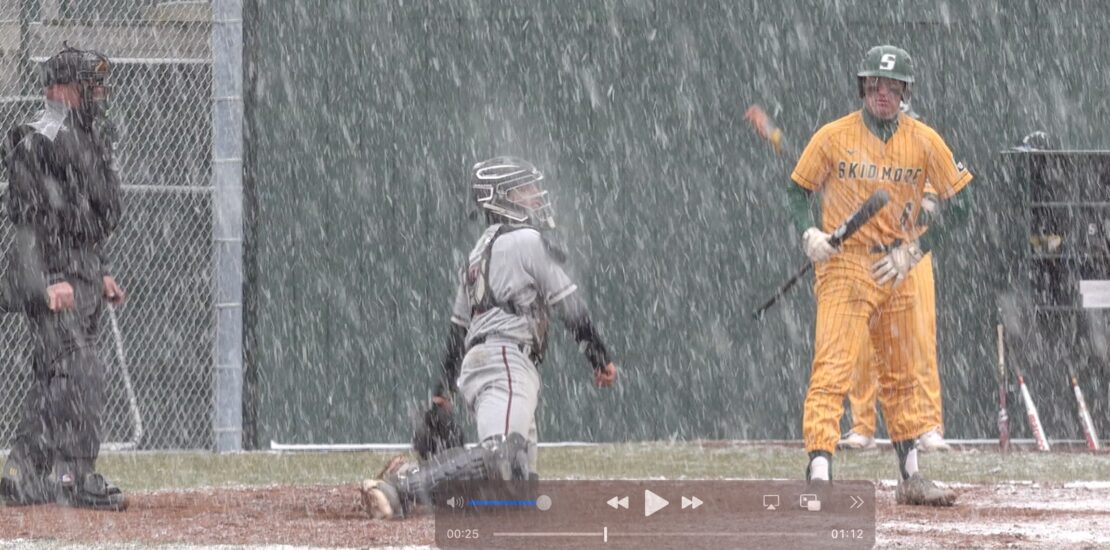
Baseball, The Toad and Coaching Unresponsive Salespeople
- April 11, 2024
- Posted by: Dave Kurlan
- Category: Understanding the Sales Force

Coaching salespeople is challenging. When they aren’t responsive to coaching it’s not only more difficult, it is downright frustrating. When you’re attempting to coach unresponsive salespeople to use the phone to directly talk with a decision maker, there isn’t much upside. Whether you’ve made this coaching attempt one time or one hundred times, the outcome will be the same, so the question we should be asking is, should this salesperson still be working for you?
-
250 Best Articles on Sales and Sales Leadership by Category
- April 4, 2024
- Posted by: Dave Kurlan
- Category: Understanding the Sales Force

These are the top 10 articles in 25 categories on sales, sales leadership, sales assessments, sales performance, sales excellence, sales process and more.
-
The Data: What Percentage of Salespeople are Really Coachable?
- April 3, 2024
- Posted by: Dave Kurlan
- Category: Understanding the Sales Force

While coaching is private, training is more public as it usually takes place in front of others. Salespeople who have the greatest incentive to change are those who are the most trainable. Those salespeople have high scores in Desire for additional sales success and Commitment to additional sales success. When a salesperson scores below 60 on Desire and/or Commitment, you aren’t likely to see much of a change in their effectiveness or performance. If they are already generating acceptable results and more of the same would be OK, then it doesn’t matter. On the other hand, if their performance is lacking, and more of the same would not be acceptable, then a salesperson lacking Desire/Commitment would be a great candidate for replacement.
-
Was the Easter Sermon About Salespeople?
- April 1, 2024
- Posted by: Dave Kurlan
- Category: Understanding the Sales Force

As someone who for thirty-eight years has led a sales consultancy specializing in sales, sales management and sales leadership training, I can easily say the exact same things about people “who belong” to the sales profession. They should be attending at least weekly training. They should be practicing their profession as we practice our faith. They should be reading about sales. But most in the sales profession are content to sit on the sidelines, and attend training only when the company forces them to. More and more, we are seeing:
-
10 Unfavorable Selling Conditions That Prevent Sales Success
- March 25, 2024
- Posted by: Dave Kurlan
- Category: Understanding the Sales Force
When you encounter unfavorable selling conditions, refuse to accept them. This isn’t about moving forward with a couple of favorable conditions, it’s about NOT moving forward unless the conditions become more favorable. Whether or not you wish to admit it, the truth is that when the conditions don’t favor you, the business isn’t coming to you.
-
Homicide Detective Makes Best Case for Sales Process
- March 21, 2024
- Posted by: Dave Kurlan
- Category: Understanding the Sales Force

The author admits that until he conducted his “cold-case investigation” of the New Testament, he was an atheist who always followed the evidence to find the truth. Similarly, a lot of prospects are also non-believers – not necessarily in Jesus – in your product or service. As I read and learned about the author’s methods for uncovering truth, or proof, I felt that salespeople could learn a lot about proof of concept, presenting facts, backing up claims, return on investment, and offering credible testimonials. That’s not nearly the analogy I’m going to make.
Wallace shared a story in the Forward about the time he was shot by a criminal who was on parole, and was not allowed to have a firearm. Up until the moment of the shooting, Wallace believed that a bullet-proof vest would stop a bullet. In the moment of the shooting, he believed in the bullet proof vest. At that moment his belief changed from “belief that” to “belief in.” That was the analogy he wished to apply to the gospels. He wondered if he could find the evidence to replace faith (belief that the miracles occurred) with proof (belief in both Jesus and the miracles).
That also happens to be my analogy from the book. Most salespeople believe that a sales process can help them succeed while the very best salespeople believe in their sales process.
-
New Data: Top Salespeople are 7562% Better at Winning RFPs
- March 13, 2024
- Posted by: Dave Kurlan
- Category: Understanding the Sales Force

RFPs aren’t going away, and there are two ways that salespeople can approach them, the companies that write them, and the people associated with them:
Passively – in this capacity, they are nothing more than facilitators, waiting for an RFP to drop in their inbox, so they can get it off to the folks who write the proposals. When complete, they email the proposal back to procurement and hope to win.
Proactively – in this capacity, they regularly meet and develop relationships with the appropriate CxO’s and Sr VP’s of manufacturing, engineering, design, IT, IS, Finance, Marketing, HR, R&D, Operations, Facilities, Fulfillment, Distribution, Sales, Learning and Development, Enablement, and any other organizational head they might possibly sell to. They become a resource, an asset, a partner and not only help to write the specifications of the next RFP, but write the specs in such a way that they are the only company that can win the business.It seems obvious, doesn’t it? Option 1 is stupid and Option 2 is brilliant. But if option 2 is so brilliant and obvious, then why do so many salespeople become so defensive and dug in to option 1?
-
Opportunity Blindness – What’s in Your Sales Pipeline?
- February 28, 2024
- Posted by: Dave Kurlan
- Category: Understanding the Sales Force

Some observations:
The data represents the forecast and funnel for 7 sales teams.
The gaps (A & G) are backwards and should say 72% (A) and 41% (G).
The quarterly forecast (C) is 58% short of the quarterly target (D).
The current closable opportunities (B) are 77% short of the forecast (C) and 90% short of the quarterly target (D).
Add columns G and H and together, all of those columns represent pathetic, old news.The question that should be asked is, “What can we do about this?”
We should be able to answer that question by looking at column F but that’s not possible. Can you see why?
Outside of telling us that there isn’t enough in the funnel, the data in column F doesn’t answer the question that must always be asked: Is the pipeline viable?
We know the assigned value of the pipeline but we don’t know the answers to these additional ten important factors:
-
25 Sales Experts on the Importance of Coaching Salespeople
- February 25, 2024
- Posted by: Dave Kurlan
- Category: Understanding the Sales Force

Sales managers are still not coaching – at least not consistently or effectively. As a reminder, consistent daily coaching increases revenue by 28% and when it is paired with effective coaching, revenue increases by 43%. It’s simply incomprehensible that sales managers aren’t picking up the clue phone.
